An orthopedic injury can make even the simplest movements feel unfamiliar. Standing up from a chair, climbing stairs, or reaching for something on a shelf may suddenly feel like your body is working against you. After the initial diagnosis and treatment, physical therapy often becomes the bridge between pain and getting your life back on track.
For many patients, that bridge feels uncertain at first. There’s hesitation, questions about pain, and worry about whether movement will make things worse. The truth is, physical therapy is not about blindly pushing through discomfort. It’s about controlled, guided progress that helps your body relearn strength, stability, and function step by step.
What Physical Therapy Feels Like After An Orthopedic Injury
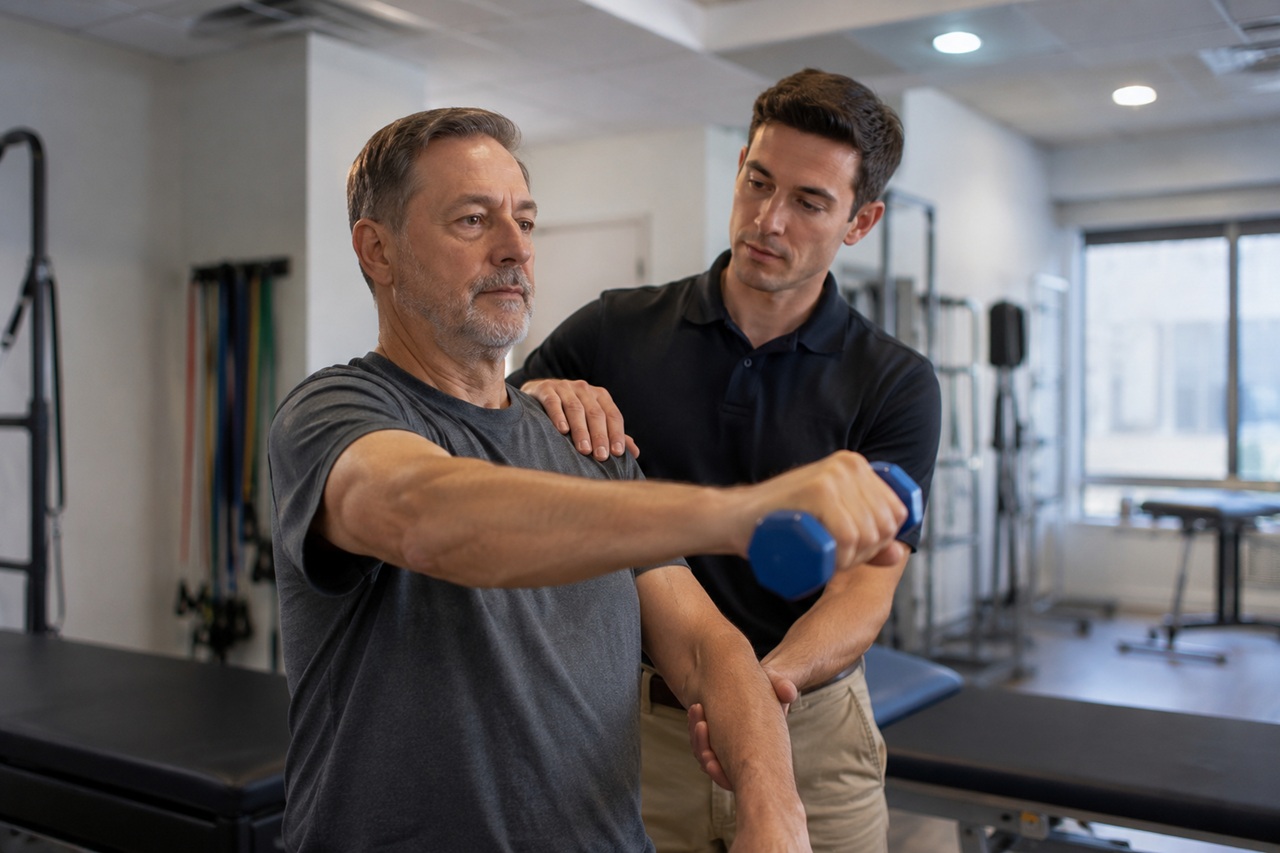
The early stages of orthopedic physical therapy can feel slower than most people expect. Progress is real, but it rarely looks dramatic from one day to the next. Instead, it helps you rebuild strength slowly over time so the injured area gets stronger and works properly again.
In the beginning, patients often notice changes that feel subtle but important, such as:
- Stiffness in the injured area after periods of rest
- Mild soreness as muscles begin to reactivate
- Fatigue after simple, controlled movements
- A gradual return of range of motion
- Improved awareness of how the injured area moves
That soreness is not the same as reinjury. It is often the result of muscles and tissues re-engaging after being limited by pain or immobilization. Still, every session is carefully adjusted so the discomfort stays within a manageable and productive range.
What Happens During Your First Physical Therapy Visit?
The first appointment is less about intensity and more about understanding. Your physical therapist will review your injury, surgical history (if applicable), and current limitations.
You can generally expect the first visit to include:
- A detailed movement assessment to identify pain triggers
- Range of motion testing to establish a baseline
- Gentle mobility exercises based on your injury type
- Education on safe movement patterns at home
- A personalized plan that evolves with your recovery
The goal is not to rush the process but to restore control and confidence.
Why Physical Therapy Matters In Orthopedic Recovery
Orthopedic injuries do not just affect bones or joints in isolation. They often change how the surrounding muscles, ligaments, and even posture function. When movement is restricted for too long, the body naturally compensates, sometimes in ways that create new strain.
Physical therapy helps correct that pattern before it becomes long-term. The recovery process typically focuses on:
- Restoring strength to muscles that have weakened during injury
- Improving joint stability to reduce reinjury risk
- Rebuilding coordination between muscle groups
- Reducing scar tissue restriction and stiffness
- Supporting safer movement in daily activities
Without proper rehabilitation, people may return to activity too soon or start moving in ways that put extra strain on other parts of the body. Over time, this can turn one injury into ongoing or repeated pain.
What Progress Looks Like Week By Week
Recovery rarely follows a straight line. Some weeks feel like major improvement, while others feel slower. That is normal and to be expected.
Common milestones during orthopedic physical therapy include:
- Reduced pain during basic daily movement
- Improved ability to bear weight or use the injured limb
- Increased flexibility and joint range
- Better balance and stability during walking or standing
- Return to light exercise or work activities
Progress is often measured less by dramatic change and more by what becomes easier without you noticing. For example, a patient may suddenly realize they are climbing stairs without thinking about each step, something that once required full concentration.
What Can Affect Your Recovery Timeline?
No two recovery journeys look the same. Several factors influence how quickly physical therapy progresses, including:
- The type and severity of the orthopedic injury
- Whether surgery was required
- How long the injury was present before treatment began
- Overall health, strength, and activity level
- Consistency with at-home exercises
Even small inconsistencies in home routines can slow progress, while steady participation often leads to smoother recovery. Communication with your care team also plays a major role in adjusting the plan as your body changes.
NYC Physical Therapists Who Support Every Step Of Recovery
At IMC Bone Doc, physical therapy is not treated as a separate phase but as part of a continuous recovery plan.
With seven office locations across New York City and Long Island, we focus on helping patients move from injury to stability with a plan that feels structured, responsive, and grounded in how the body actually heals.
If pain or limited movement is keeping you from daily life, contact us today to schedule an appointment. Our team is here to evaluate your condition, clearly explain your options, and guide you through each stage of healing with care that remains consistent from start to finish.
"Dr. Kat is an excellent doctor. He is very understanding, and he listens to my complaints. I appreciate him. Keep up the good work. Dr. Kat, you are very empathetic. Thanks again." - Shawn C., ⭐⭐⭐⭐⭐